
Concrete Entry Guide • Northern Virginia
Should Damaged Concrete Steps, Walkways, or Landings Be Repaired or Replaced?
Cracks, settlement, spalling, poor drainage, uneven risers, and failed transitions do not all call for the same concrete repair. The practical decision depends on what failed below and around the visible surface—not only how the damage looks.
Direct Answer
Concrete Steps, Walkways, and Landings: Repair or Replace?
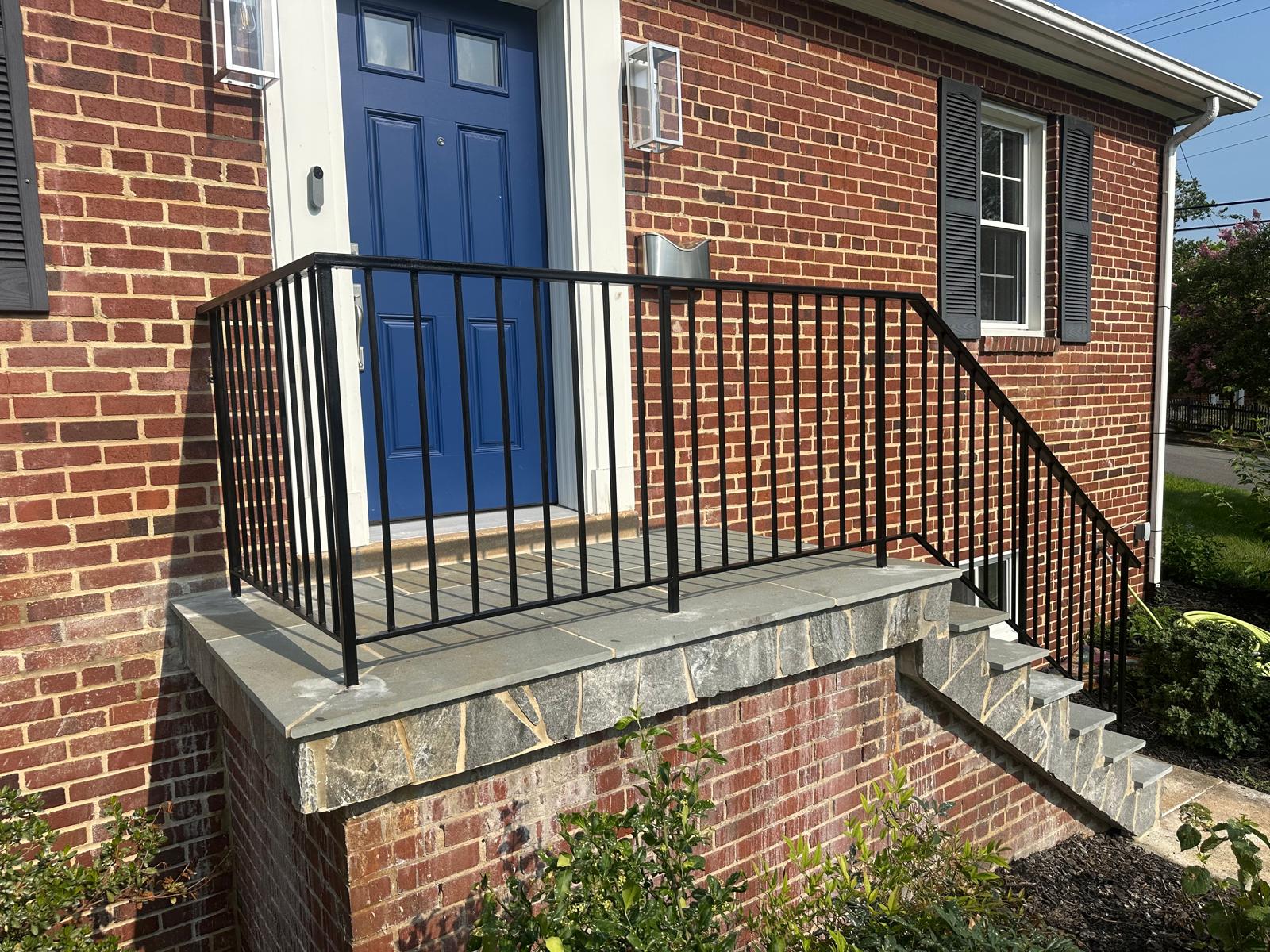
A localized surface defect or isolated damaged section may be repairable when the supporting base, elevations, drainage, and surrounding concrete remain stable. Replacement is usually more practical when concrete has settled, moved, cracked through its depth, created unsafe transitions, drains toward the building, or depends on a failing base. Steps and landings also require review of riser consistency, handrails, door clearances, and applicable approval requirements.
What to Know
Start with the Failure, Not the Patch
A cosmetic patch can improve appearance without correcting settlement, water movement, inadequate support, or a deteriorated concrete section. Before choosing a method, identify whether the visible damage is primarily at the surface or reflects movement through the full assembly.
- Surface scaling or shallow spalling without movement
- A crack that remains narrow and does not create a height difference
- Settlement that creates a trip edge or directs water toward the building
- Broken step noses, loose sections, or inconsistent riser heights
- Damage at a doorway, railing post, masonry edge, or public-sidewalk transition
- Recurring deterioration connected to drainage, deicing exposure, or a failed base
What to Know
When a Focused Repair May Be Reasonable
Repair can be appropriate when the damaged area is limited, the remaining concrete is sound, movement has stopped, and the repair can be prepared and bonded without creating a misleading appearance or safety concern.
- Localized spalls or broken edges with stable surrounding concrete
- A defined section that can be saw-cut and replaced at logical joints
- Minor surface deterioration where the repair method matches the exposure
- A step or landing detail that can be corrected without leaving inconsistent geometry
- Conditions where drainage and base support are already working
- A customer who understands that repaired concrete rarely matches aged concrete exactly
What to Know
When Replacement Is Usually the Better Scope
Replacement is often more durable when the problem involves the base, elevation, full-depth cracking, repeated movement, or a layout that must be rebuilt to create safe and drainable transitions.
- Multiple cracks combined with settlement or rocking sections
- Water ponding on the walk or landing or flowing toward the entry
- Poorly supported concrete or visible base loss
- Steps with inconsistent risers, failed landings, or unsuitable door transitions
- Extensive spalling, delamination, or reinforcement-related deterioration
- A repair area so large that replacement provides clearer scope and better value
What to Know
Information That Speeds Up an Estimate
Clear photos and basic measurements can help determine whether a small concrete project is worth an on-site evaluation. They do not replace field verification when elevations, structure, access, reinforcement, utilities, or approvals affect the work.
- One wide photo showing the entry, walkway, or landing in context
- Two or more medium views showing transitions and drainage
- Close photos of cracks, spalls, settlement, and edges
- Approximate length, width, number of steps, and visible height changes
- Photos of crew access and the likely concrete-removal route
- ZIP code, desired decision timing, and any known HOA or permit history
Related Service
Move from Research to an On-Site Evaluation.
Review the complete concrete walkways & steps scope, then request a free estimate when you are ready for Constructology to look at the property.
Frequently Asked Questions
Helpful Answers
Can one damaged sidewalk or walkway section be replaced?
Sometimes. A selective replacement is most practical when the removal limits follow usable joints and the adjacent elevations, base, drainage, and remaining concrete are suitable.
Will repaired or new concrete match the existing concrete?
An exact match is rarely possible. Mix, aggregate, finish, age, weathering, and curing affect appearance, so the proposal should set expectations before work begins.
Can drainage be corrected with the concrete work?
Yes. Slope, landing elevations, channel drains, catch basins, and adjacent grading can be evaluated as part of the connected scope when water contributes to the problem.
Can photos provide a final concrete price?
Photos and measurements can help prequalify the project, but final scope and pricing may require an on-site review of elevations, access, base conditions, demolition, reinforcement, transitions, and approval requirements.
Do concrete steps or landings require permits or handrails?
Requirements depend on the jurisdiction, dimensions, location, use, and connected construction. Constructology identifies applicable permit, inspection, and railing coordination before work begins when required.
Continue Learning
Related Construction Guides
How to Review a Multi-Scope Outdoor Construction Proposal
A Northern Virginia guide to comparing coordinated drainage, concrete, hardscape, grading, restoration, engineering, allowances, exclusions, and project sequencing before approving an outdoor construction proposal.
Read the GuideDoes a Retaining Wall Need an Engineer in Northern Virginia?
Learn when a Northern Virginia retaining wall may need engineering, permits, drainage design, or contractor coordination before construction or repair.
Read the GuideFrench Drain vs. Grading vs. Swale | Northern Virginia
Compare French drains, grading, drainage swales, catch basins, and connected yard-drainage solutions for Northern Virginia properties.
Read the GuideYard Drainage: Find the Water Source, Route, and Outlet
Learn why a Northern Virginia yard-drainage plan should trace where water starts, how it moves, and where it can discharge before choosing a French drain, swale, grading, catch basin, or downspout route.
Read the GuideBasement Water: Drainage, Waterproofing, or Foundation Repair?
Understand whether basement water may begin with grading and drainage, waterproofing failure, a leaking crack, or a structural foundation concern.
Read the GuideExterior Foundation Waterproofing Scope Checklist
A Northern Virginia homeowner's guide to comparing exterior foundation waterproofing proposals: diagnosis, excavation, wall preparation, waterproofing, drainage, backfill, restoration, and exclusions.
Read the GuidePaver or Flagstone Walkway: Repair, Relevel, or Rebuild?
Learn when a settled paver or flagstone walkway in Northern Virginia can be relevelled and when base, drainage, edge, or layout failures make rebuilding more practical.
Read the Guide